
Indian Chintz
From Luxury and Currency to 'Chintzy'—A History Reclaimed

Infophilia: A Positive Psychology of Information | December 13, 2025, Vol. 3, Issue 72
✨Welcome to Infophilia, a weekly letter exploring how our love of information and connections can help us all thrive, individually and collectively. This is one of the places where we’re pioneering a positive, evolutionary, social and cultural psychology of information, a living lab, avant-garde research. We’re shining a light to deepen our understanding of the power of information.
If this is your first time, we’re glad to have you here. We began 2025 with Information Literacy at 50 (open access) but you can go back further for essays on Infophilia and the Dopamine Connection, Infophilic Information Styles, and Artificial Intelligence.
📌 Cite & support: We provide previews and occasional free issues to keep our writing accessible; students can ask for free access, and anyone who can’t afford a subscription may request a complimentary one. If you find value here, please cite the original and consider upgrading. This serial is sustained by reader support and proper attribution rather than by copying or harvesting ideas without credit. Thank you for practicing healthy infophilia, information engagement that helps not harms.
Cite as: Coleman, A. S. (2025). Indian chintz: From luxury and currency to ‘chintzy’—a history reclaimed. Infophilia: A Positive Psychology of Information, 3(72).
Indian Chintz
From Luxury and Currency to ‘Chintzy’—A History Reclaimed
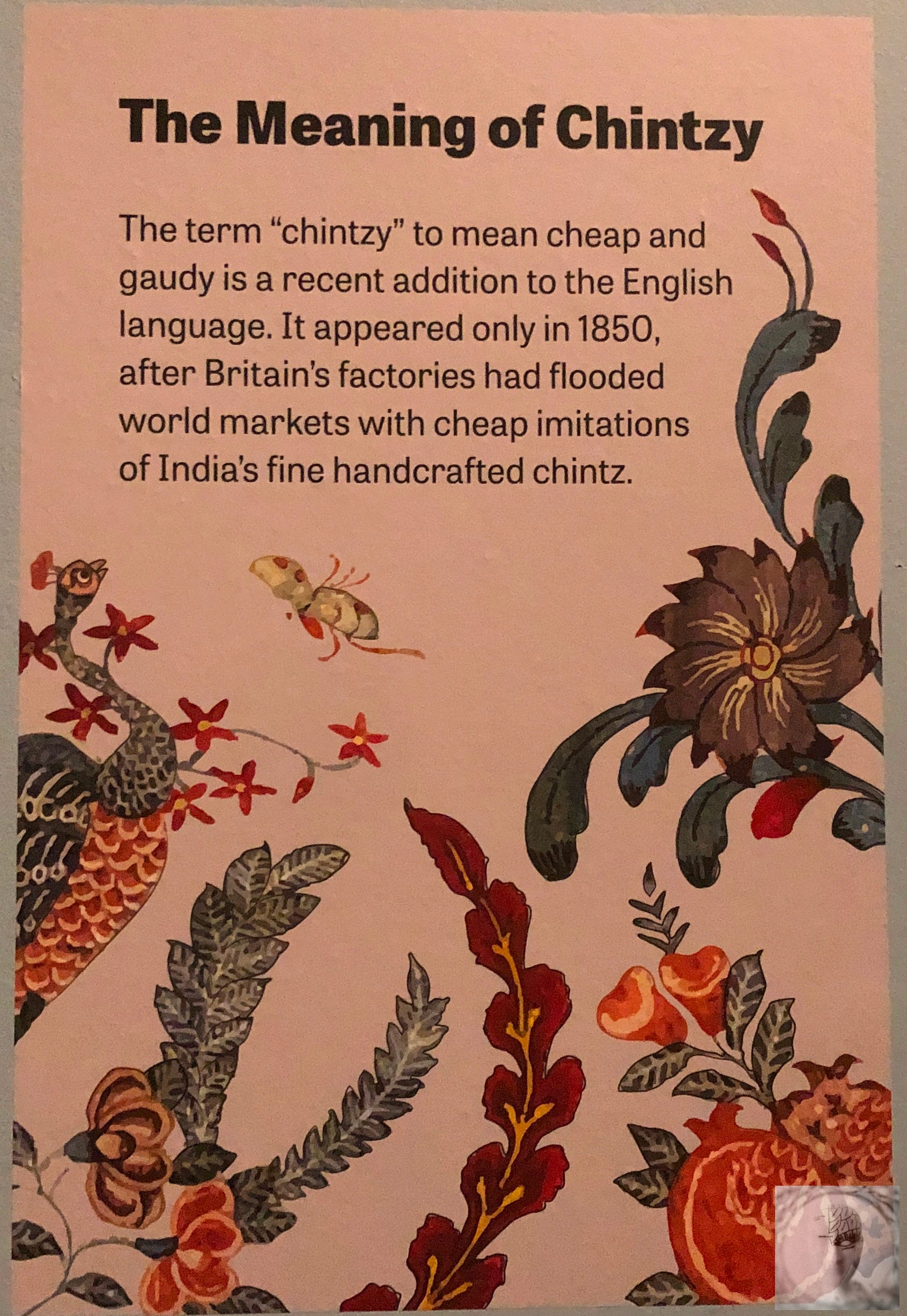
Until the 19th century, India was the world’s leading center of cotton textile production and export. Indian spinners, many of them women, produced exceptionally fine cotton yarns, and dyers and painters developed mordant and resist techniques that made their colors remarkably durable. European demand for these painted and printed cottons—often called chintz—became so intense that governments in countries like France and Britain passed laws in the 17th and 18th centuries restricting or banning their import to protect domestic industries.
The story of Indian cotton textiles, including chintz, is one of artisans whose skills underpinned global trade networks—textiles so coveted they served as currency in the spice trade—contributed to the rise of European empires, and helped set the stage for Britain’s Industrial Revolution. Yet for a long time, many standard accounts of that revolution minimized or overlooked the central role of Indian producers, a gap that historians and curators are now working to correct.
I’d been planning to share the Nobel Peace Prize story today—a meditation on how attention determines what endures. But curator Sarah Fee’s exhibition at the Bowers Museum Global Threads: India’s Textile Revolution, featuring pieces from the renowned chintz collections at the Royal Ontario Museum, made me realize chintz tells an even richer version of that story. The joy of discovering what’s been hidden, the satisfaction of setting the record straight, the pleasure of seeing brilliance finally recognized—this is infophilia at its most powerful: using information to restore what was stolen. And chintz, the fabric that changed the world, deserves our attention.